SlimMD™
Assessment, medical context, nutrition, movement, sleep, behavior, progress review and long-term maintenance.
Always the complete care frameworkA doctor-guided approach bringing together clinical assessment, individualized medical strategy, nutrition, lifestyle support and structured progress review.
Personalized • Clinician-Guided • Indian Nutrition • Structured Follow-Up

Medical assessment and individualized treatment.
A plan shaped around your assessment.
Protein, micronutrients and real food.
Designed around sustainable habits.
SlimMD is a doctor-guided medical weight-management program built around assessment, individualized treatment decisions, Indian nutrition, movement, sleep, behavior and structured follow-up. Prescription medication is optional and used only when clinically appropriate.
SlimMD is designed around a clinician-first sequence: understand the person, review relevant health information, decide what is appropriate, then monitor and adapt. No prescription pathway should begin with marketing alone.
The doctor profile and experience displayed on this page are based on the information supplied for this webpage. Treatment decisions remain individualized after clinical assessment.
View full doctor profile →Body weight is not a matter of willpower alone. It is shaped by a whole system working around you and within you — appetite signals, food choices, nutrition quality, daily activity, sleep, stress, existing medication, ingrained habits, health conditions and even your food environment.
That is why single-tool approaches — a crash diet, a gym membership, an injection on its own — so often deliver temporary results. SlimMD is designed differently: a doctor-guided weight loss program that works on the system, not just the symptom, so change can actually be sustained.
Hunger and fullness are coordinated through signals between the brain and digestive system, together with learned cues such as time, smell, availability and habit. A meal low in protein or fibre may feel very different from a balanced meal even when both look similar in size. Poor sleep, long gaps between meals and stressful days can make cravings or impulsive eating harder to negotiate. Understanding when and why appetite becomes difficult is therefore more useful than repeatedly telling yourself to simply “eat less.”
SlimMD looks at your actual appetite day: when hunger begins, which meal leaves you least satisfied, whether evenings are difficult, whether you graze between meals and whether cravings are physical, habitual or emotional. Your plan can then strengthen meal structure with protein, fibre-rich foods, appropriate portions, hydration and realistic timing. Sleep and stress patterns are addressed alongside food because appetite does not operate in isolation. If a clinician determines that prescription treatment is medically appropriate, it can be considered as one part of this wider strategy rather than as a substitute for nutrition and lifestyle care.
What you eat is influenced by what is available, visible, affordable, familiar and easy at the exact moment a decision is made. Very long gaps between meals can turn an ordinary restaurant menu into a much harder decision, while having a planned option ready can completely change the same evening. Portion size, cooking method, beverages, side dishes and frequency also matter, so foods do not need to be divided simplistically into “good” and “bad.” A useful plan therefore improves the pattern of choices without demanding perfection.
SlimMD identifies your recurring decision points: rushed mornings, office lunches, evening hunger, weekend dining, sweets after dinner, travel or frequent ordering. Together these can be redesigned with practical options — a better breakfast, a planned snack, a protein-forward restaurant order, portion strategies or a convenient home meal that takes less time than delivery. Indian staples such as rice, roti, dal, curd and familiar home food can remain part of an individualized plan where appropriate. The intention is to improve the quality and consistency of decisions while keeping eating socially and practically livable.
During weight reduction, adequate protein, fibre, essential fats, vitamins, minerals and fluids remain important for normal body functions and overall diet quality. When total intake is reduced, there are fewer opportunities during the day to obtain these nutrients, making meal composition more important. Extreme restriction can also be difficult to maintain and may leave people feeling that successful dieting means eating the smallest possible quantity. A more thoughtful approach aims for appropriate energy reduction while preserving nutritional adequacy and variety.
SlimMD builds meals around recognizable food rather than abstract calorie numbers alone. A typical framework can emphasize a meaningful protein source, vegetables or other fibre-rich foods, appropriately portioned carbohydrate, healthy fats and adequate fluids, individualized to preferences and medical needs. Vegetarian and non-vegetarian patterns can both be accommodated, and practical solutions are developed for low-appetite days, travel and busy schedules. Where history or clinical assessment suggests a nutritional concern, the clinician can decide whether further evaluation or supplementation is appropriate.
Physical activity supports cardiovascular health, mobility, metabolic health, mood and physical capacity. Everyday movement — walking during calls, stairs, household activity, standing breaks and short walks — can accumulate even when formal exercise time is limited. Resistance exercise also deserves consideration because maintaining strength and muscle function is valuable while body weight is changing. An unrealistic exercise prescription, however, often produces a burst of enthusiasm followed by pain, exhaustion or abandonment.
SlimMD establishes a practical baseline and progresses from there. This might mean walking after dinner, adding short movement breaks during office hours, gradually increasing steps, scheduling two manageable strength sessions or adapting exercise around joint discomfort and medical limitations. Targets can evolve as stamina and confidence improve rather than being imposed at maximum intensity on day one. Exercise is coordinated with nutrition and recovery so that each part of the program supports the others.
Insufficient or irregular sleep can interact with appetite, cravings, mood, concentration and energy for physical activity. Staying awake late can also extend the eating window and create additional opportunities for unplanned snacking. Persistent sleep disruption may sometimes reflect issues that require medical evaluation rather than simply poor discipline. This makes sleep an important part of understanding the complete weight-management picture.
SlimMD asks about bedtime, wake time, sleep duration, night waking, late-night eating, screen habits and how rested you feel during the day. Practical changes can include a more consistent sleep window, a deliberate wind-down routine, reviewing late caffeine or heavy meals and separating bedtime from habitual snacking. The aim is not a perfect nightly score but a repeatable recovery routine. Symptoms such as significant snoring, witnessed breathing pauses or marked daytime sleepiness should be discussed with a clinician.
Stress can alter appetite and disrupt sleep, meal timing and daily routines. Some people lose appetite under pressure, while others crave foods associated with comfort or reward, particularly in the evening. When the same trigger repeats frequently, eating can become an automatic coping routine before conscious choice has time to intervene. Learning to recognize the trigger is therefore an important first step toward creating another response.
SlimMD can map the situations most often associated with unplanned eating — deadlines, boredom, fatigue, loneliness, social pressure or late evenings. A strategy may include keeping regular meals so genuine hunger is not added to emotional stress, introducing a brief pause before acting on a craving, changing the immediate environment or choosing another decompression routine such as walking, calling someone or taking a structured break. These tools are not intended to trivialize significant psychological distress. When symptoms suggest anxiety, depression, binge-eating or another mental-health concern, appropriate professional assessment is important.
Some medicines may influence appetite, body weight, glucose regulation, fluid balance, gastrointestinal function or energy, and existing treatment can affect the suitability of adding another prescription. Over-the-counter products and supplements also belong in the medication history because “natural” does not automatically mean irrelevant. Simply stopping a medicine suspected of affecting weight can create far greater health risks than the weight concern itself. Safe weight management therefore begins with medication reconciliation and clinical context.
SlimMD reviews current prescriptions, relevant non-prescription products, supplements, allergies and previous treatment experiences during the clinical assessment. The clinician can consider contraindications, interactions, overlapping therapies and the individual's medical conditions before recommending a prescription pathway. Follow-up then provides an opportunity to review tolerability, adherence and clinically relevant changes. Medicines prescribed by another clinician should not be stopped, switched or dose-adjusted independently for the purpose of losing weight.
Habits reduce the mental effort needed for repeated actions, which is useful when the habit supports health and frustrating when it does not. They are often connected to a cue such as time, location, another activity, an emotion or a particular person. Trying to remove a well-established routine using motivation alone can leave the original cue untouched, making relapse more likely. Changing the environment or substituting a new response can therefore be more practical than repeatedly relying on self-control.
SlimMD looks for a few high-impact patterns rather than handing you twenty new rules on the first day. Evening snacking might be addressed by improving dinner, changing what is kept near the television and creating a planned alternative; inactivity after work might begin with shoes placed at the door and a ten-minute walk immediately after arriving home. Once one behaviour becomes easier, another can be layered onto it. Regular review helps distinguish a strategy that genuinely fits your life from one that only sounded good on paper.
Body weight interacts with health conditions in complex ways, and medical context can influence treatment priorities, investigations, medication suitability and monitoring. Conditions such as diabetes or prediabetes, thyroid disorders, PCOS and sleep apnoea may be relevant in some individuals, but they should be evaluated rather than assumed to explain every difficulty with weight. Previous weight changes, family history, symptoms and treatment attempts also contribute useful information. A clinician-led assessment helps separate relevant medical issues from assumptions and internet self-diagnosis.
SlimMD begins with history taking rather than immediately handing everyone the same diet or prescription. Relevant diagnoses, symptoms, current medicines, previous attempts, family history and available investigations can be reviewed, with additional evaluation considered when clinically indicated. This context helps the clinician decide whether lifestyle intervention, further investigation, prescription treatment or another pathway is appropriate. Follow-up allows the strategy to change as health information, tolerability and progress evolve.
Humans naturally respond to convenience, visibility, portion size and repeated cues. The same influences appear outside the home through office snacks, restaurant portions, commuting, celebrations, travel and one-tap food delivery. When the environment continually promotes the opposite of the intended behaviour, every decision requires active resistance. Modifying a few recurring cues can therefore reduce friction without attempting to control every situation.
SlimMD looks at where your week actually happens. At home this might mean changing shopping patterns, keeping convenient protein and vegetables ready or portioning foods before sitting down; at work it might mean carrying a planned option instead of reaching the cafeteria extremely hungry. Restaurant and social strategies can include reviewing the menu beforehand, prioritizing the main meal and deciding deliberately which indulgences matter to you. Travel plans can focus on a few anchor behaviours rather than trying to reproduce the home routine perfectly.
SlimMD is the overarching medical weight-intelligence program. A medication-supported pathway may sit inside that program when a clinician determines it is appropriate; the program itself remains broader than any one medicine or product.
Assessment, medical context, nutrition, movement, sleep, behavior, progress review and long-term maintenance.
Always the complete care frameworkA named program option within the SlimMD ecosystem. Exact product composition, prescribing criteria, medicine information and package details must be verified before publication or enrollment.
See medical pathway →A named pathway presented within the SlimMD ecosystem. Suitability, medicine-specific information, dosing, contraindications and monitoring belong to the treating clinician and current approved product information.
Check clinical suitability →Nutrition, movement, sleep and behavior support can stand on their own when prescription treatment is not appropriate, not desired or not needed.
Explore lifestyle care →Nine forces move around your health at once. Select any one to open its dossier — what it does, and how SlimMD works with it.
The quiet negotiator of every meal.
Hunger and fullness are hormonal signals, not character traits. Sleep, stress, meal timing and certain medication all change how loudly they speak.
Your assessment maps your appetite pattern, and where clinically appropriate, prescription treatment and meal structure are used to bring the signals back into balance.
Quality decides what the weight loss is made of.
The same calories can be built from protein-rich, micronutrient-dense food or from ultra-processed convenience. The difference shapes muscle, energy and satiety.
SlimMD builds your plate around protein, vegetables, quality carbohydrate and healthy fat, using foods you actually eat.
The multiplier for everything else.
Daily activity influences appetite regulation, insulin sensitivity, mood and how much of your weight loss comes from fat rather than muscle.
A movement hierarchy that starts with walking, adds resistance training, and grows with you — no punishment workouts.
Recovery is a nutrition decision made at night.
Short or broken sleep shifts hunger hormones the very next day and makes cravings harder to negotiate.
A structured wind-down routine is written into your plan, because the program works better on a rested body.
Sometimes it isn’t hunger at all.
Stress eating answers an emotional signal with food. Recognising the difference between physical hunger and craving changes the outcome.
The 5-minute pause and simple recognition tools help you respond to the real need instead of the loudest one.
What you rehearse is what you become.
Most eating happens on autopilot — same time, same place, same portion. Habits outlast motivation, in both directions.
SlimMD changes routines gradually, one rehearsed behaviour at a time, so the results have something to live in.
Your existing prescriptions matter here.
Some medicines influence weight, appetite or how a treatment plan should be built. They are context, never an afterthought.
Every current prescription is reviewed in your medical assessment before any treatment decision is made.
Weight is a medical story, not a moral one.
Thyroid function, metabolic health, PCOS and other conditions can shape weight — and deserve proper evaluation, not guesswork.
Clinician-led assessment looks at your medical context first, so the plan fits the person it is written for.
The food landscape you live inside.
What is visible, convenient and nearby gets eaten. Kitchens, workplaces and travel schedules quietly vote on your behalf.
Practical environment design — from your kitchen to eating out and travel — is part of the program, not an afterthought.

“Your body has been waiting for a plan this complete. Give it one.”
The SlimMD StandardHow the SlimMD weight management program works: four clinically coordinated pillars, each supporting the others, so no single tool has to carry your entire journey.
Clinician-prescribed weight-management medication may form one part of the program when medically appropriate — never the whole of it.
Nutrition planning helps participants prioritize protein and maintain food quality when overall intake decreases.
Reduced calorie intake can sometimes reduce nutritional variety. Appropriate micronutrient support may be incorporated based on individual needs, reviewed by your clinician.
Personalized nutrition, movement, sleep, hydration and behavioral systems help turn temporary change into sustainable habits.

“One decision today. Four pillars working for you tomorrow.”
Begin Beautifully
“You don’t need another diet. You need the whole equation.”
Complete, Not ExtremeEvery SlimMD journey begins with a structured medical assessment, because the safest personalized weight loss program is one built on your real health picture — not a generic template.
“The safest treatment plan starts with the right assessment.”
“The most luxurious thing we offer is simple — being truly understood.”
Made To MeasurePrescription weight-management treatment is not automatically appropriate for every person. Eligibility depends on the exact medicine, approved indication, your health history, current medication, contraindications and the treating clinician's assessment.
Prescription weight-management treatment should only be used after clinical assessment. Within SlimMD, medically supervised weight loss means the clinician — not marketing — decides whether, when and how prescription support enters your plan.
Medical history, current medication, contraindication review, patient education and honest expectation-setting come before any prescription is written.
Treatment monitoring, tolerability review, nutrition and hydration support, and scheduled clinical follow-up continue throughout your journey.
Medication selection, dosage, dose escalation, missed-dose management and discontinuation must follow the treating clinician and verified product instructions.

Medicine-specific details — including active ingredient, indication, dose schedule, escalation, missed-dose rules, storage, contraindications, warnings and adverse effects — are provided only for the exact medicine prescribed and must follow the treating clinician and that product’s current approved information. SlimMD does not substitute generic assumptions for product-specific instructions.
“Modern medicine, held to a couture standard of care. This is your moment to use it.”
Clinician GuidedDuring weight reduction, appetite often falls faster than nutritional needs do. Protein contributes to normal muscle maintenance, tissue repair, satiety and overall meal quality — which is exactly why it becomes more important, not less, as your plate shrinks.
Weight reduction should not simply mean eating as little as possible. The SlimMD aim is appropriate energy reduction while the quality of what remains rises — with protein at every main meal, planned deliberately rather than left to chance.
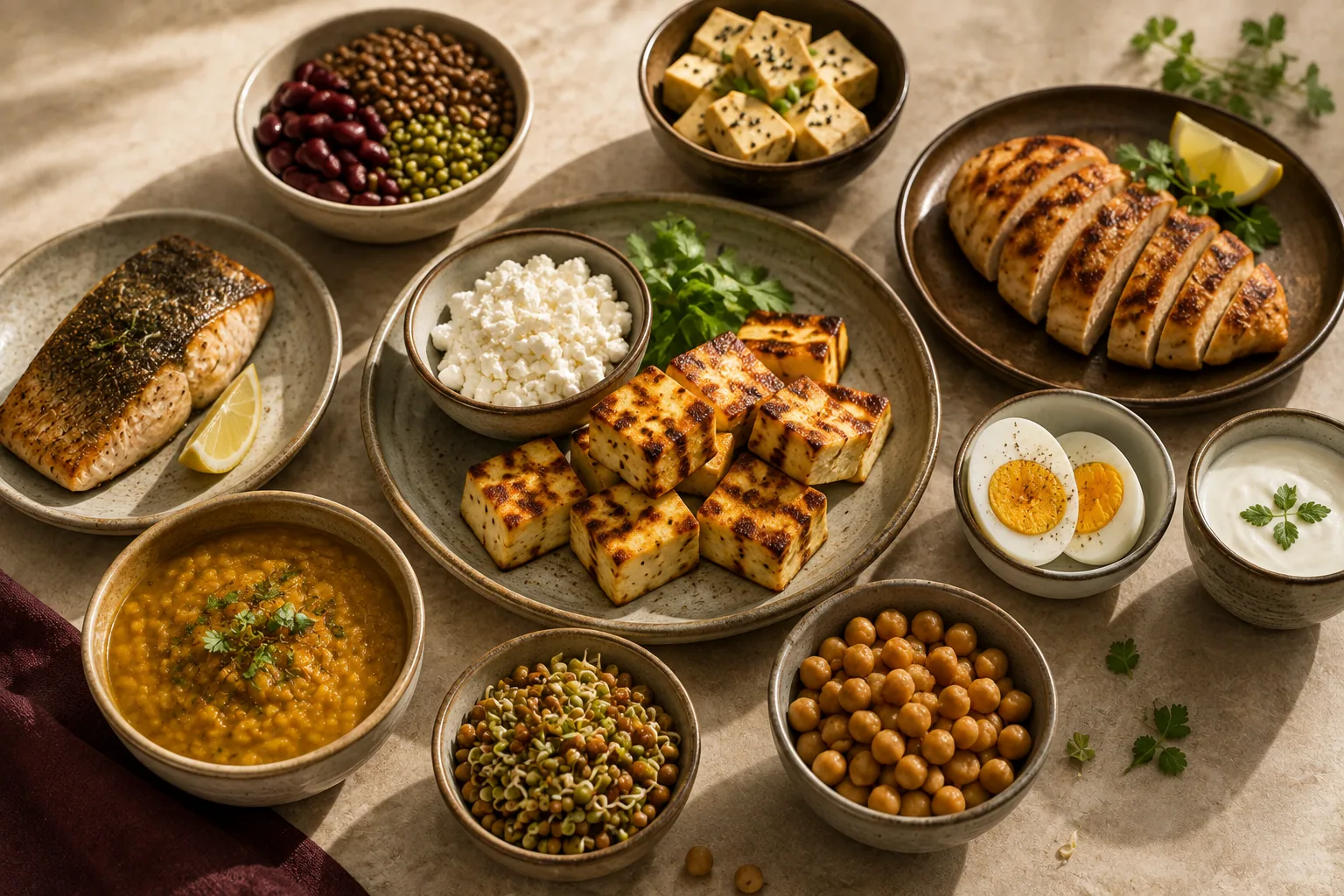
Bhurji, tikka, grilled cubes in sabzi — versatile anchors for lunch and dinner across the week.
Rotate dals, chana, rajma and sprouts so protein arrives with fibre and familiar flavours.
Curd, Greek-style dahi and soy chunks lift the protein of meals that would otherwise be carbohydrate-led.
Boiled, bhurji or omelette — a fast, flexible protein for breakfast and snacks.
Grilled or curried fish brings lean protein with regional variety, from coastal to home-style preparations.
Tandoori, curry or grilled preparations keep protein central without heavy frying.
A protein supplement can bridge the gap on low-appetite days — as an addition to food-first planning, not a replacement for meals.
Type, timing and quantity are personalized within your plan and reviewed with your care team.
[SlimMD PROTEIN PRODUCT SLOT] — verified product details to be inserted.
Curd bowl with roasted chana; boiled eggs; besan chilla batter kept ready; a planned protein shake.
Paneer cubes, sprouts and salad from the fridge become a meal faster than ordering in.
Roasted makhana, nuts in measured portions and a supplement sachet keep protein possible anywhere.
“Feed your strength as generously as your ambition. Start today.”
Nourish To FlourishWhen overall food intake decreases, maintaining dietary quality becomes particularly important. Fewer meals and smaller portions can quietly narrow the variety of vitamins and minerals your food supplies.
SlimMD reviews your actual diet first — food remains the foundation. Where gaps are likely, appropriate supplementation may be incorporated, always checked against anything you already take to avoid duplication, and always subject to clinician review.
“The finest results are built on the finest details. Begin with yours.”
Details MatterOne visual, every meal: a simple structure that keeps protein central and portions calm without weighing food or counting obsessively.
The anchor of every plate — paneer, dal, eggs, fish, chicken or a planned supplement.
Volume, fibre and micronutrients — generous by default.
Rice, roti, millets — individualized portions, never banned.
Measured oils, nuts and seeds in deliberate amounts.
Alongside every meal, throughout the day.
Eat slowly. Notice fullness. Stop comfortably satisfied.
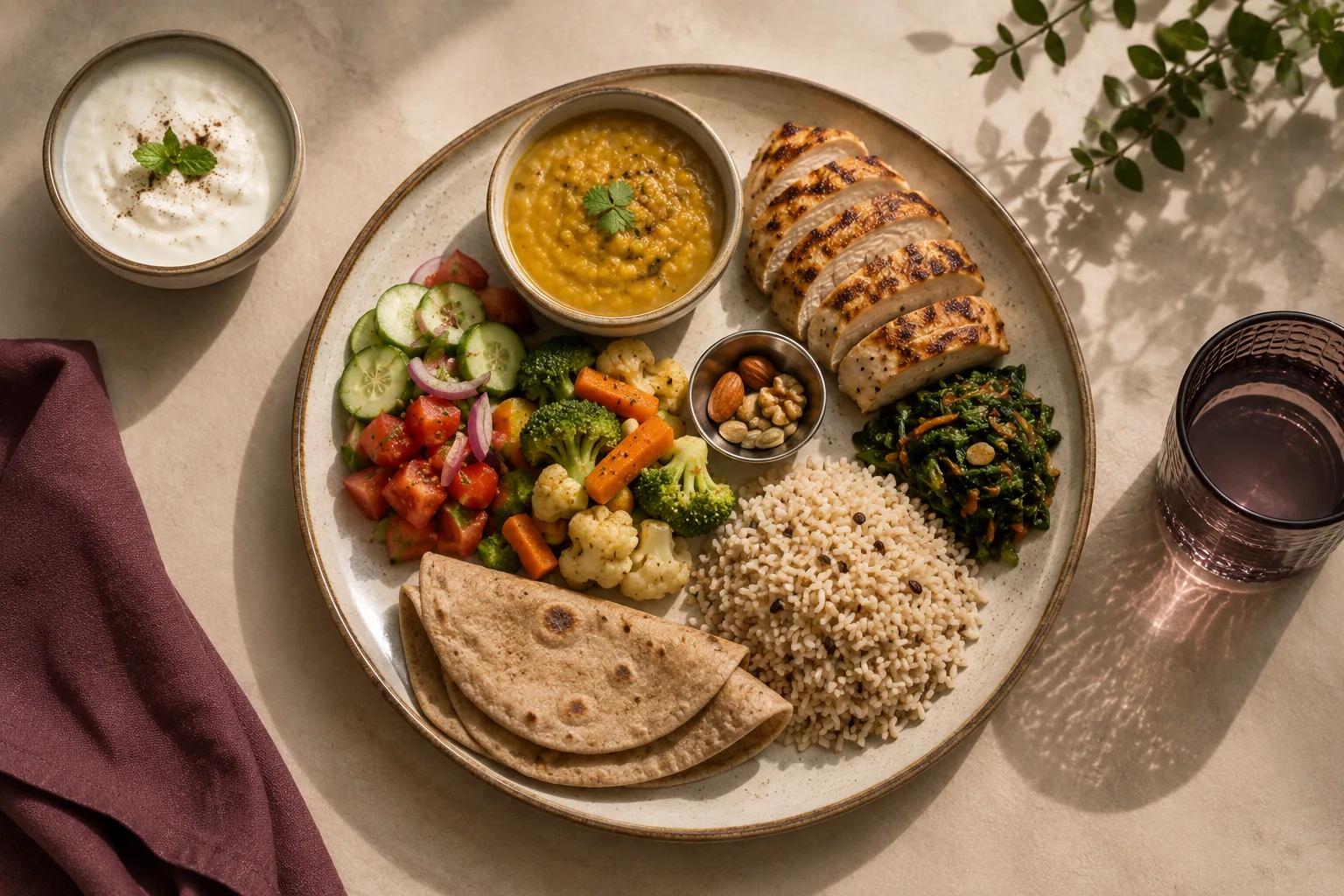
“Every masterpiece begins with composition. So does every plate.”
Compose Your PlateA weight loss diet plan does not need imported ingredients or bland restriction. SlimMD restructures the meals you already know — dal, sabzi, roti, curd, fish curry — so the day becomes protein-forward and portion-aware. Rice, roti and fruit are not demonized; they are planned.
Paneer or tofu bhurji, besan chilla, curd-based bowl, or balanced poha/upma with added sprouts.
Dal + sabzi + salad + paneer + curd, with a controlled rice or roti portion.
Curd, roasted chana, a protein supplement, planned fruit, or nuts in appropriate portions.
Protein (paneer, dal, soy) + vegetables + an individualized carbohydrate portion.
Eggs — boiled, bhurji or omelette — with vegetables, or a curd-based meal.
Chicken or fish + sabzi + salad + curd, with a controlled rice or roti portion.
Eggs, roasted chana, curd, a protein supplement, planned fruit, or measured nuts.
Grilled fish or chicken + vegetables + an individualized carbohydrate portion.

“Keep the food you love. Change the story it tells.”
Your Food, ElevatedDaily steps and everyday activity form the base of the pyramid.
Resistance training supports lean tissue while weight comes down.
Consistent, quality sleep supports appetite regulation and recovery.
Regular fluids matter more when appetite and intake fall.
Pause, review and return to routine — without guilt — after off-plan days.

“A better you is not found. It is rehearsed, daily, until it becomes you.”
The Daily AtelierMovement in SlimMD is layered, not extreme — three rings around the same centre, each one wrapping the last. Daily movement builds the habit. Aerobic activity builds stamina and cardiovascular health. Resistance training gives your body a reason to hold on to strength. Progression is gradual and individualized.
Steps, stairs, chores — woven into the day you already live. Builds the habit.
Walks, cycling, swimming — stamina and cardiovascular health.
2–3 sessions weekly — a reason for your body to hold on to strength.
“Walk in like you mean it. Your stronger self is already waiting.”
Move With IntentionRapid weight change places demands on the whole body. Deliberate protein intake, regular resistance work and proper recovery are designed to support strength and function through your journey — results vary between individuals.

“Lose what weighs you down. Keep what makes you powerful.”
Strength Is The StyleShort, irregular sleep makes hunger harder to read and routines harder to keep. SlimMD treats sleep as clinical territory — sweep the meridian from last light to first.
“Protect your recovery. It supports the rest of the plan.”
Beauty Of RecoveryBuilds gradually. Felt in the body. Open to many foods. Satisfied by a normal meal. Comfortable to wait fifteen minutes.
Arrives suddenly. Tied to a mood, a screen or a habit loop. Wants one specific food. Often continues past fullness, and rarely satisfies the feeling underneath.

“The pause is not weakness. It is the most elegant move you own.”
Composed, AlwaysThe first twelve weeks of the SlimMD medical weight management program move through four deliberate phases — each with its own focus, so that nothing important is rushed and nothing sustainable is skipped.

“Twelve weeks from now, you will wish you had started today. So start today.”
Week One AwaitsSlimMD reviews a whole dashboard of measures, because a good week can show up in your waistline, your energy or your strength before it shows up on the scale. No example figures are shown here — your dashboard is built from your own data.
Direction over weeks, not day-to-day noise.
A simple, meaningful body measure.
How your days actually feel.
Appetite patterns and control.
What your training shows.
Steps and sessions per week.
Consistency and quality.
Protein and plate structure.
Your relationship with food.
Reviewed by your clinician where relevant.
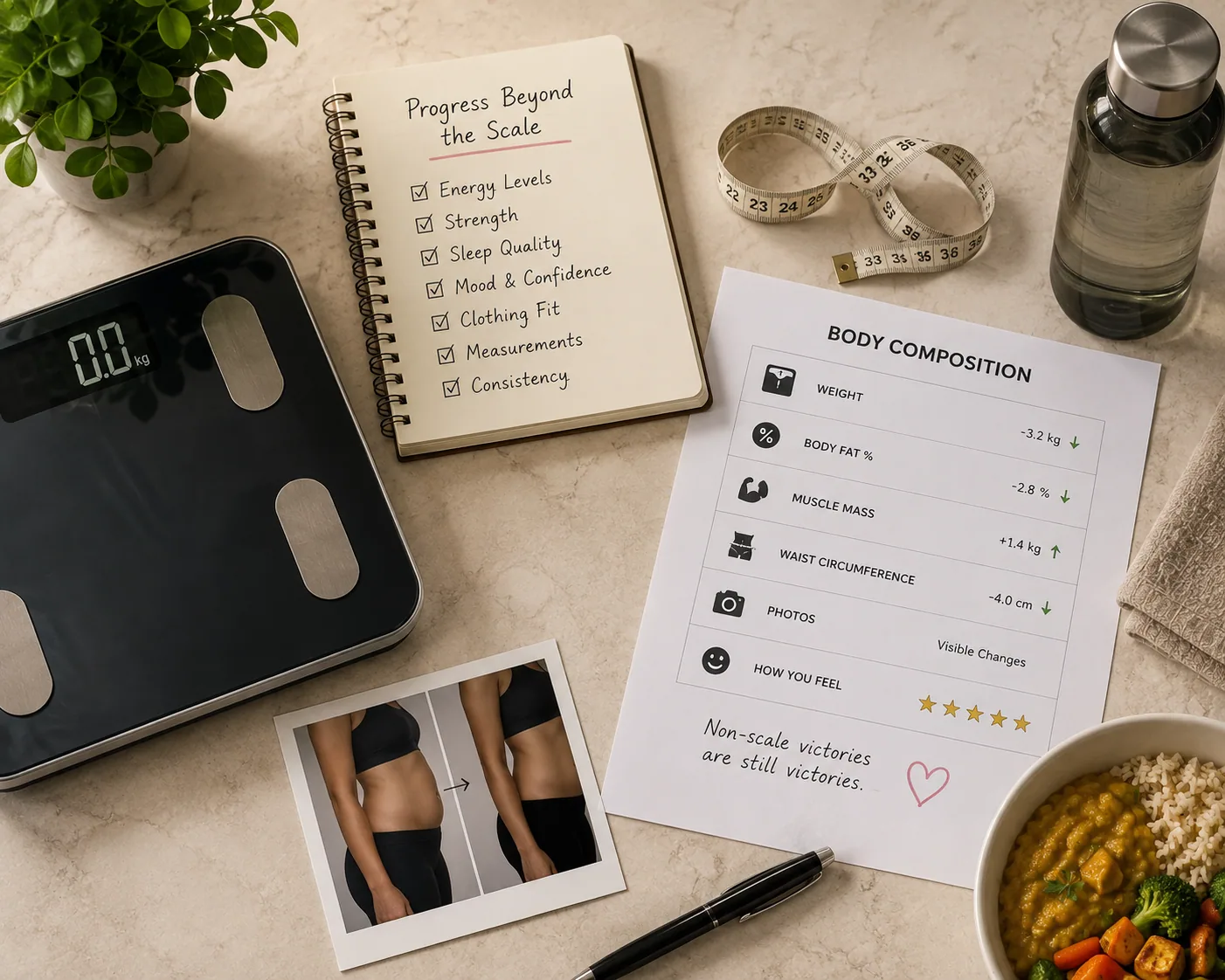
“Measure what matters — and watch how much of you improves.”
Progress, CuratedIndividual experiences vary.

“The scale whispers one number. Your life announces the rest.”
Victories EverywhereCommon experiences during weight management have practical, general lifestyle responses. None of the notes below prescribe medication — treatment decisions belong with your clinician.
Smaller, slower meals; simpler food; fluids between rather than with meals.
Protein first on the plate; smaller portions more often; stop when comfortable.
Fluids, fibre from vegetables and legumes, and daily movement.
Gentle food, hydration, and noting possible triggers to discuss at review.
Smaller evening meals; avoid lying down soon after eating.
Prioritize protein and fluids first when little appetite exists.
Scheduled sips through the day rather than large volumes at once.
Return to the rotation; use the supplement bridge on difficult days.
Use the restaurant playbook below — plan, don't avoid life.
Prepare medication, protein and routine before the trip, not during it.
Review the checklist below with your team before changing anything.
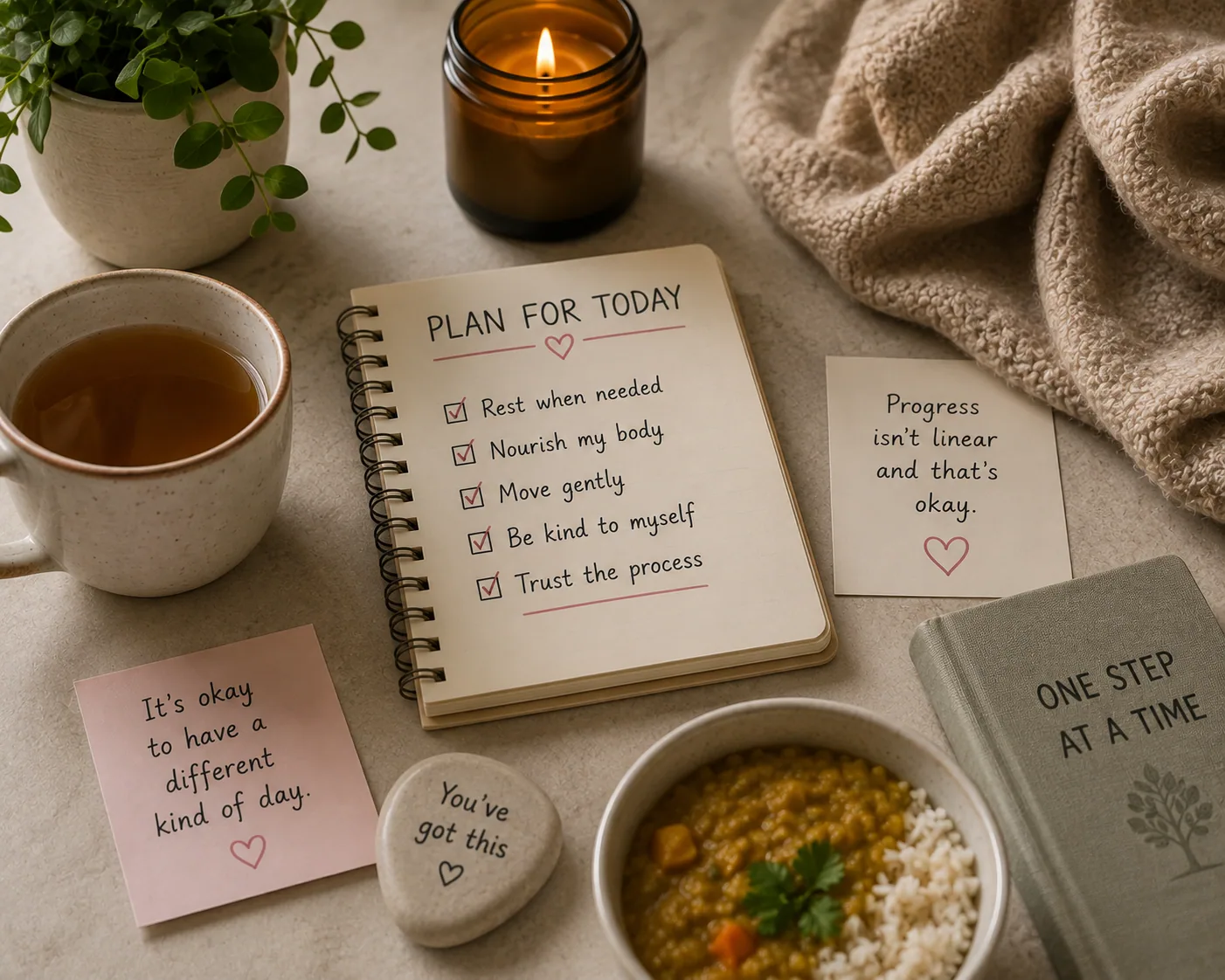
“Hard days are part of the design. So is the support that carries you through them.”
Never Alone In ThisFor potentially life-threatening symptoms, do not wait for a routine appointment — seek emergency care immediately.
Medication-specific safety information differs by product. Follow the current approved information for the exact medicine prescribed to you and seek urgent medical care for potentially life-threatening symptoms.

“True luxury is being cared for properly. Begin where safety begins.”
Cared For, CompletelyRestaurants, weddings, buffets, hotels, airports and business dinners are part of a full life. The strategy is printed once and served everywhere.

“Take your seat at every table. The plan comes with you.”
Live Fully, Plan WellTravel is planned into the program, not around it. Before any trip: prepare your medication and follow the product-specific storage instructions for the exact medicine prescribed, carry prescription documentation where relevant, and sketch a simple protein plan for the days away.

“Pack the routine. Bring home the results.”
First-Class HabitsPlateaus are common during longer-term weight management. Still water is not stopped water — beneath a quiet surface, everything continues. Before assuming anything has failed, walk the stones of the review with your care team.
“Still water is not stopped water.”

“A pause in the numbers is not a pause in you. Keep going — beautifully.”
Steady Is Stunning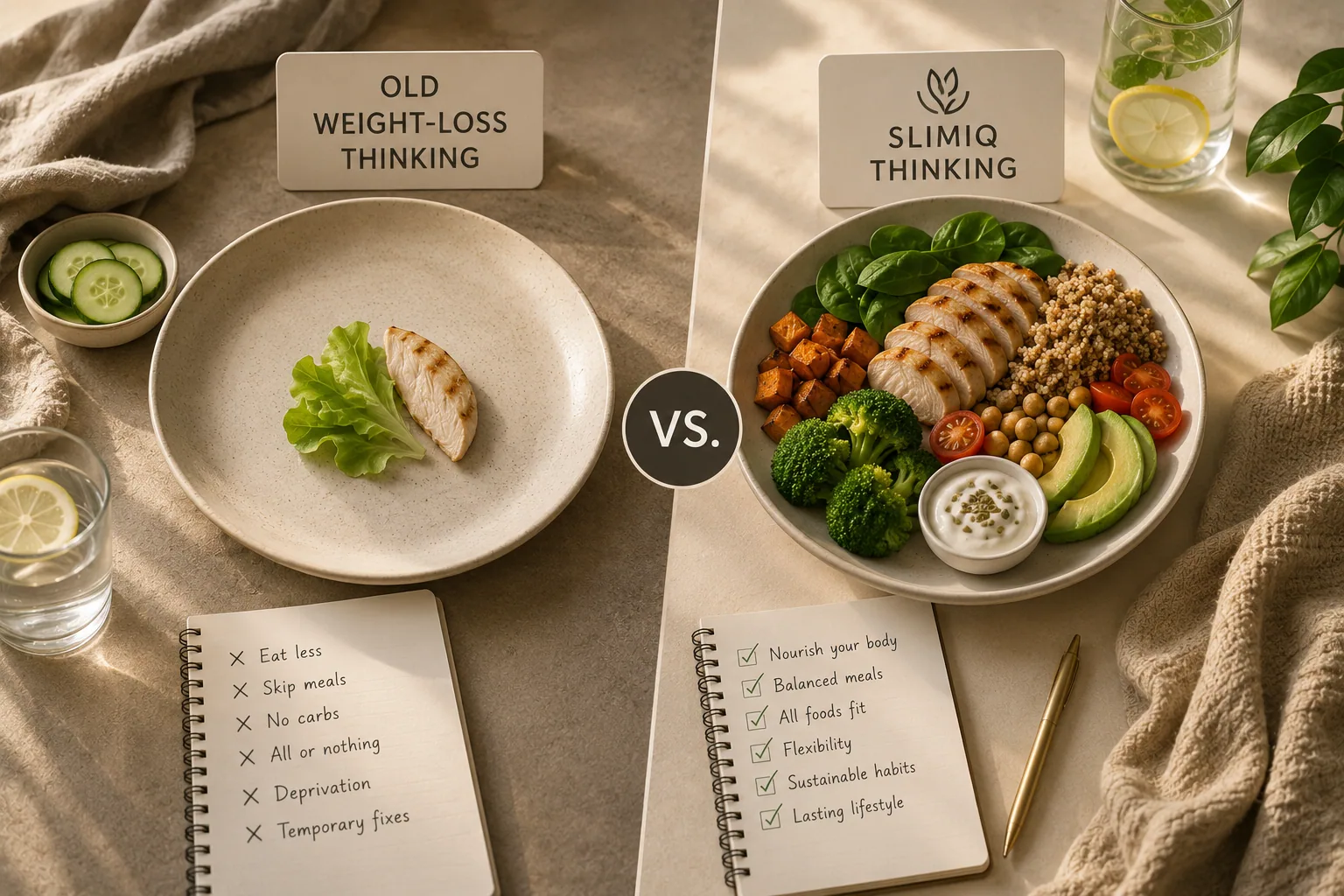
“You have tried the old way. Now try the complete way.”
Choose DifferentlyThe source file supplied for this webpage does not specify a verified program price, medicine price, laboratory fee or consultation tariff. Rather than invent a number, SlimMD should confirm the exact fee and inclusions before enrollment.
Before payment, provide the patient with the exact program fee, what is included, what is not included, medicine costs where applicable, review cadence, cancellation/refund terms and renewal or maintenance costs.
Request Exact PricingClinical education on this page is intentionally general. Medicine-specific prescribing decisions, doses, contraindications, warnings and missed-dose instructions must come from the treating clinician and the approved information for the exact product prescribed.
Before publication, connect this page to the clinic's verified editorial policy, medical reviewer profile, professional registration details where appropriate, content review date and evidence/reference page. Do not display registration numbers, affiliations, outcomes or clinical claims unless they have been verified.
Hover or tap any card to turn the myth over.
“The injection does everything.”
Medication may support weight management, but nutrition, movement, behavioral habits and monitoring remain important.
“I should eat as little as possible.”
The aim is appropriate calorie reduction while maintaining nutritional quality.
“Rice and roti must disappear.”
Food choices and portions can be individualized rather than applying universal bans.
“Protein is only for gym-goers.”
Protein supports muscle maintenance, repair and satiety — it matters most when overall intake falls.
“Exercise is just about burning calories.”
Movement builds fitness, strength and health that a calorie number cannot capture.
“Sleep has nothing to do with weight.”
Sleep influences appetite regulation, energy and the ability to keep routines — it is part of the program.
“A plateau means the program failed.”
Plateaus are normal. The response is structured review, not panic or automatic dose changes.
“Vegetarians can't get enough protein.”
Paneer, tofu, curd, dals, chana, soy and beans can build a strong vegetarian protein rotation.
“Supplements replace real food.”
A multivitamin or protein supplement supports a healthy diet; it does not replace one.
“Anyone can start the injection.”
Prescription treatment requires clinical assessment, contraindication review and ongoing supervision — it is not suitable for everyone.
“Eating out ruins everything.”
One deliberate meal out changes little. The plan simply resumes at the next meal.
“Once I reach my goal, I'm done.”
Maintenance is its own phase — routines, monitoring and follow-up carry the result forward.
“Weight regain means personal failure.”
Regain has causes that can be reviewed and addressed — notice, review, reset, reconnect, reassess.
“Stress eating is just weakness.”
Emotional eating follows recognizable patterns that structured strategies — like the 5-minute pause — can address.
“Faster is always better.”
Sustainable pace with preserved nutrition and strength serves long-term health better than speed alone.
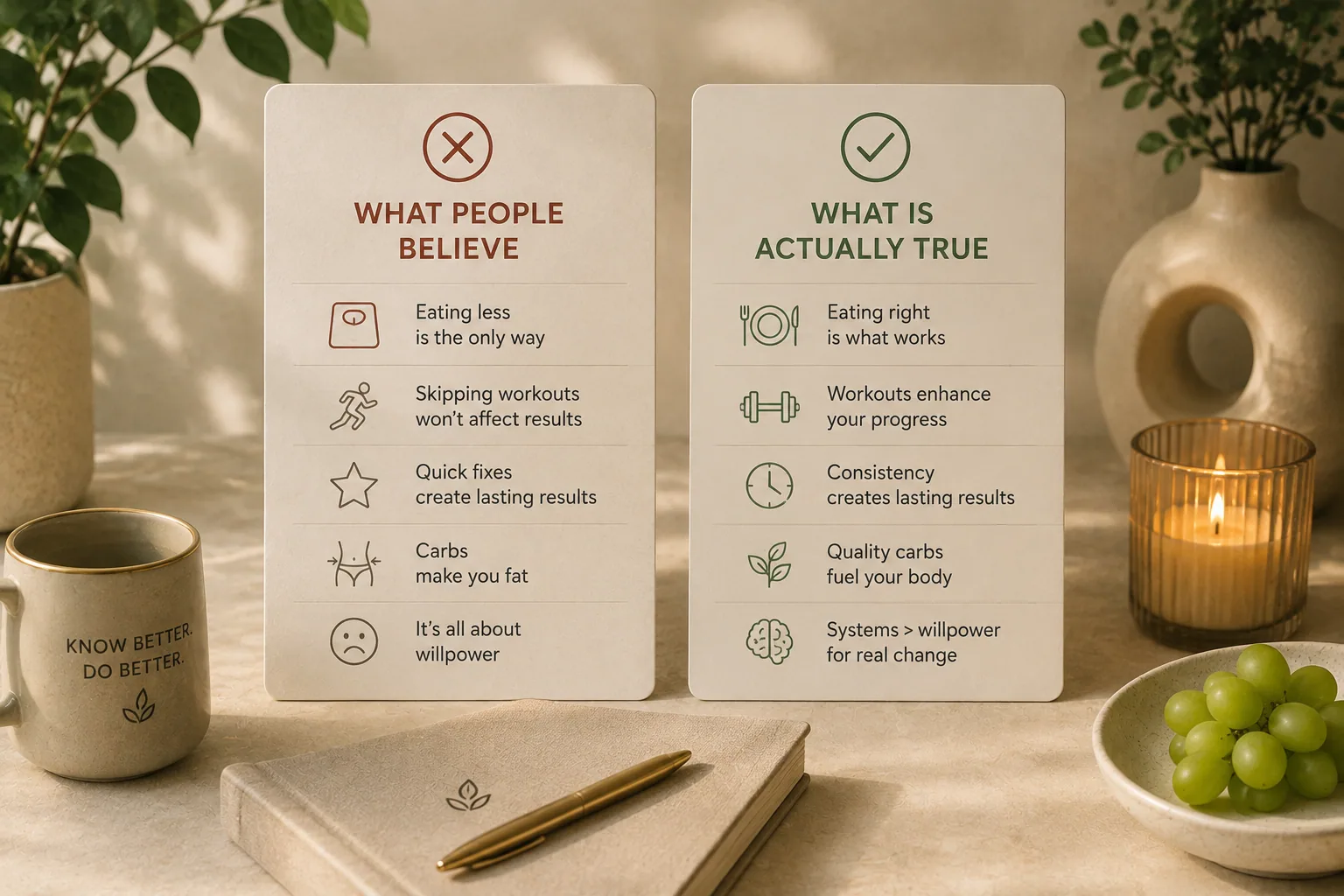
“Trade the myths for a method. Your results deserve the truth.”
Facts Are FlatteringSustainable weight management continues after the milestone: steady routines, a supportive food environment, protein and resistance exercise as fixtures, protected sleep, gentle self-monitoring, planned social occasions and travel, scheduled clinical follow-up — and individualized medication decisions made with your clinician, never by default.
The habits that produced the result are the habits that protect it.
Keep the kitchen aligned with the plan you want to live.
Both remain central through maintenance, not just weight loss.
Light, regular check-ins catch drift early.
Planned into life, using the same playbooks.
Reviews continue on an individualized schedule.
No shame. No failure language. Just structure.

“Don’t finish a diet. Found a lifestyle with your name on it.”
Yours For Life
MBBS · MD · DDV
With 20 years of experience in the wellness and cosmetic industry, Dr. Jyotii A Agarkar brings an experienced, patient-focused perspective to the SlimMD™ care experience. Her presence on the program page reinforces a simple principle: meaningful weight-management decisions deserve professional context, thoughtful communication and individualized clinical judgment.
“A premium care experience begins with listening carefully, understanding the individual and making the next step clearer.”
Doctor profile information shown here is based on the credentials and experience supplied for this webpage. Treatment recommendations, prescription decisions and monitoring remain individualized after appropriate clinical assessment.
Illustrative male and female patient journeys showing how structured medical guidance, nutrition and sustainable habits can help people work toward meaningful weight-management goals.
“This is the first review I'm testing it. Kindly pleaes proceed and see whether its working”
“I had tried strict diets before, but they never fitted my routine. SlimMD helped me understand portions, protein and daily movement. Over 12 weeks, I reached my initial weight-loss milestone and felt more energetic and in control. Checking”
“My workdays are unpredictable, so complicated plans never lasted. The team helped me build simple meals, walking targets and follow-up habits. I achieved the goal we had set together and, more importantly, developed a routine I can continue.”
“The consultation looked at my health history and lifestyle instead of giving me another generic chart. The regular reviews kept me motivated. My clothes fit better, my stamina improved and I completed the program feeling genuinely proud of my progress.”
“SlimMD broke a large goal into smaller weekly actions. I learned how to manage restaurant meals, hydration and strength training without trying to be perfect. I reached my planned milestone and now feel confident about maintaining the habits.”
“My aim was weight loss, but I also wanted better energy and a healthier relationship with food. The coordinated nutrition and lifestyle guidance helped me achieve my target while feeling stronger, calmer and more consistent.”
“I appreciated that every step was explained and adjusted to my routine. The combination of medical review, meal planning and movement support helped me stay accountable and reach the realistic weight goal discussed at the beginning.”
Illustrative testimonials: The stories and names above are fictional composite examples created to demonstrate the intended testimonial format; they are not statements from actual SlimMD patients. Replace them with genuine, consented and verifiable patient reviews before presenting this section as real-world feedback. Individual experiences and outcomes vary.
SlimMD is a structured, clinician-guided medical weight management program. It coordinates prescription support when medically appropriate, protein-focused nutrition, micronutrient support, personalized diet planning and sustainable lifestyle change into one journey.
It begins with a medical assessment, then builds a personalized plan across four pillars — prescription pathway, protein and nutrition, micronutrient support, and diet plus lifestyle — with structured monitoring and clinical follow-up through phases of foundation, adaptation, momentum and consolidation.
No. Diet is one pillar of four. SlimMD also covers medical care, movement, sleep, stress and behavior — because sustainable weight management involves more than what is on the plate.
No. SlimMD is a program. Prescription medication may be one component when a clinician assesses it as appropriate, but the program stands on nutrition, lifestyle and monitoring as well.
Eligibility is decided individually by the treating clinician after assessing weight history, BMI, health conditions, current medication and contraindications against the prescribed product's approved criteria.
No. Some health conditions and medications make prescription treatment inappropriate. That is exactly why the program begins with assessment rather than a prescription.
Yes. The nutrition, movement, sleep and behavior systems stand on their own. Medication is one possible tool, never the definition of the program.
Yes. The vegetarian protein rotation is built around paneer, tofu, curd, dals, chickpeas, soy and beans, with supplement support where appropriate.
Yes — the program is designed around it. Dal, sabzi, roti, curd, fish curry and paneer all appear in the meal patterns; the change is structure and portions, not cuisine.
Yes. Rice is individualized in portion, not banned. Quality carbohydrate has a place on the SlimMD Plate.
Yes. Like rice, roti is planned by portion within your individualized day of eating.
Not always. Food-first is the rule; a supplement is a bridge for low-appetite days or genuine gaps, decided within your personalized plan.
Protein contributes to normal muscle maintenance, tissue repair, satiety and meal quality — all of which matter more when overall intake falls.
Possibly. Reduced intake can narrow nutritional variety, so appropriate micronutrient support may be incorporated based on your diet and clinician review. A multivitamin supports a healthy diet; it does not replace one.
Yes — movement is a pillar. Begin with everyday movement, add structured aerobic activity, and progress gradually with individualized guidance.
For most people, yes. Resistance training combined with adequate protein and recovery is designed to support lean tissue and function during weight loss. Your plan is individualized.
General strategies include smaller, slower, simpler meals and fluids between meals. Persistent, severe or worsening nausea requires clinical review — do not adjust medication yourself.
Fluids, fibre from vegetables and legumes, and daily movement help. Discuss persistent symptoms with your clinical team.
Prioritize protein and fluids first, use smaller frequent meals, and inform your care team — very low intake needs clinical attention, not silent endurance.
Usually yes, with preparation: follow the product-specific storage instructions for your exact medicine, and carry prescription documentation where relevant.
Follow your treating clinician's instructions and the approved product information for your exact medicine. Never improvise doses or double up — missed-dose rules are product-specific.
Yes. Use the playbook: don't arrive excessively hungry, prioritize protein and vegetables, stay portion-aware, choose enjoyment deliberately, and resume routine at the next meal.
You review — nutrition, portions, beverages, movement, strength, sleep, stress, adherence and measurement consistency — with your team. Automatic dose escalation is never the response.
On an individualized schedule set with your clinician — typically more frequently early in the journey and at a steady cadence through maintenance.
The consolidation phase begins: maintenance routines, continued monitoring, planned occasions and travel, and individualized decisions about ongoing treatment with your clinician.
It can, which is why maintenance is built into the program. If weight trends upward, the response is structured: notice, review, reset, reconnect, reassess.
Through routines, a supportive food environment, ongoing protein and resistance exercise, protected sleep, light self-monitoring and scheduled clinical follow-up.
The program is personalized, but not every component suits every person — which is why assessment comes first and every plan is individualized.
Because weight management can involve prescription medicines, existing health conditions and meaningful physiological change. Supervision keeps treatment appropriate, monitored and safe — and adapts the plan as you change.
“Every question answered brings you one step closer. Take the step.”
Ask, Then BeginThis short form prepares the clinical conversation. It does not diagnose, determine prescription eligibility or replace a consultation.
Connect the form to your secure CRM or booking endpoint and configure verified phone, WhatsApp, clinic address and website details before launch. They are intentionally not fabricated in this file.